
How to Monetize Pinterest Videos Legally: 2026 Guide
Here is the blunt version up front, because most guides on this topic waste your first five minutes: Pinterest pays you nothing for views. There is no per-view payout for video pins, no creator fund cheque for a viral clip, and downloading a video does not transfer any ownership to you. So if you want to know how to monetize Pinterest videos legally, the real question is not “how do I cash in this download” — it is “which downloaded videos can I legally build income around, and which routes are closed no matter how you dress them up?” This guide answers exactly that, with a test I ran myself and the platform rules that actually get enforced.
I am not a lawyer, and this is general information, not legal advice. The legal lines below come from Pinterest’s own Terms of Service, which I read for this article, and from the platform policies that decide whether an account keeps earning. Test claims carry numbers; rule claims name the rule. Nothing here promises an income figure, because anyone quoting you one for re-uploaded content is selling you something.
The one rule first: downloading is not owning
Pinterest’s Terms of Service, section 3(a), say it plainly: “You retain all rights in, and are solely responsible for, the User Content you post to Pinterest,” and “You will only post User Content that you have the rights to post, and you won’t post User Content that infringes the intellectual property rights of others.” Read that twice, because it settles the whole topic. The person who made the video keeps the rights. Pinterest itself only holds a licence to display and distribute it on Pinterest. And that licence does not pass to you because you found the pin, saved it, or downloaded the file.
Two confusions cause most of the trouble here. First, “public” does not mean “public domain.” A video can be visible to everyone on Pinterest and still be fully owned by its creator. Second, credit is not a licence. Writing “credit to the original creator” under a re-uploaded video does not give you permission, and it does not stop a copyright claim — it just proves you knew the work was not yours. There is a third trap that is easy to miss: the account you downloaded from is often not the rights holder at all. Pinterest is built on re-pinning, so a video can pass through five accounts before it reaches you, and crediting the account you found it on can mean crediting the wrong person while still infringing.
One more wrinkle: Pinterest’s Terms say commercial use of Pinterest itself needs a business account, and sponsored or branded content falls under its Commercial and Branded Content Guidelines. That tells you how seriously the platform treats the line between personal inspiration and commercial use.
How to monetize Pinterest videos legally: the green, amber, red test
Every downloaded video falls into one of three buckets. Run yours through this before you spend an hour editing anything.
| Bucket | What it means | Example |
|---|---|---|
| GREEN — safe to build on | You own it, you licensed it, or its licence allows your use | Your own pins downloaded back; a video with written permission; a public-domain or Creative Commons video used within its licence terms |
| AMBER — risky, platform-dependent | Transformative reuse that changes the meaning or purpose | Genuine commentary, criticism, review, or reaction where your voice and analysis are the point, not the clip |
| RED — do not monetize | Someone else’s work used as if it were yours | Re-uploading a video unchanged; running ads or affiliate links against it; selling downloaded files; stripping creator credit; bulk scraping |
The amber bucket deserves a careful word, because it is where most “fair use” talk goes wrong. Fair use in US law is judged on four factors: the purpose of your use (commercial uses get less protection, transformative uses get more), the nature of the original work, how much of it you take, and whether your version substitutes for the original in the market. Re-uploading a whole video so you can run ads or affiliate links against it fails most of those at once — commercial purpose, the whole work taken, and a direct substitute for the creator’s own post. A reaction video where you pause every few seconds, explain what is happening, criticise a technique, or teach something the original never taught is a different animal, because your contribution is the reason to watch. Even then, “transformative” is judged case by case and platform by platform, and the law differs by country. Amber means “proceed with your eyes open,” not “probably fine.”
What I tested: the download itself
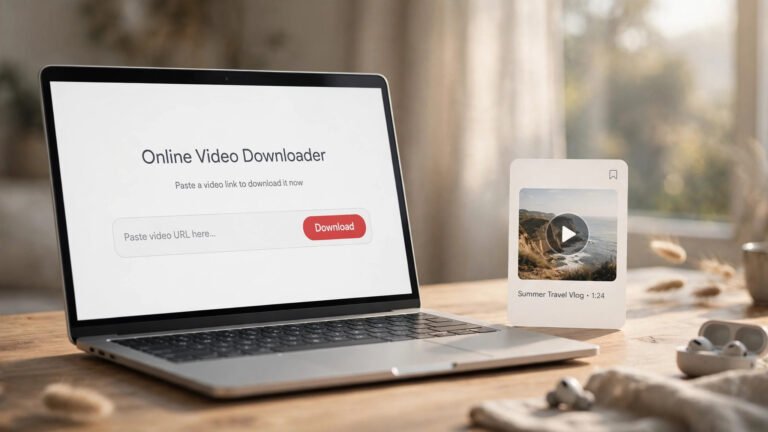
Before writing about monetizing downloads, I ran the download through the pintodownload tool on a public test pin, the same way a reader would: paste the pin link, submit, and see what comes back. The test browser was desktop Chrome, unthrottled, fresh profile. Here is what actually happened:
| Step | Result |
|---|---|
| Homepage input ready | 2.5 seconds |
| First submit | 3.1 seconds — tool answered “no video found” |
| Second submit (same link, retyped) | 2.9 seconds — 1 MP4 link returned |
| File returned | Pinterest’s own 720p source file (2.7 MB), verified HTTP 200, video/mp4 |
Two things in that table matter for the rest of this guide. First, the first attempt failed and the retry worked, and I could not prove why — it was either a transient extractor failure or a slow script initialisation. So if a download fails once, retry before concluding the pin is unavailable; that is practical advice from a real failure, not a guess. Second, the tool returned Pinterest’s source file itself, not a re-encoded copy and not a version with anything added or stripped. That is useful for reference, and it is also the point: the file you get is someone else’s finished work, unchanged. Nothing about downloading it changes who owns it.

Five legal ways to earn from downloaded videos
Notice the shape of every route below: each one shows how to monetize Pinterest videos legally, and in each one the download is the starting point, never the product. You study it, then you make something of your own.
1. Film your own version — the strongest route by far
Find a video that works, understand why it works, then film your own version with your own materials, your own voice, and your own mistakes left in. A DIY tutorial you actually perform beats a re-uploaded tutorial on every axis that matters: it is unambiguously yours, platforms promote it instead of suppressing it, and sponsors will pay for it because no one else can offer the same footage. Publishers’ playbooks for Pinterest video converge on the same specs, and they apply to videos you own: vertical 9:16, short awareness loops around 6–15 seconds, demos around 15–30 seconds, a bold first two seconds, and captions throughout, because most Pinterest viewers watch with the sound off. If your version only works with audio, it will underperform no matter how good the idea was.

2. Blog and affiliate around your own content, not someone else’s
Write the tutorial, the comparison, or the guide yourself, film or photograph your own version, and put affiliate links on your page. That is the entire legal affiliate play built on Pinterest inspiration, and it is also the one that compounds: your article keeps ranking long after a re-uploaded clip gets taken down. Two discipline points separate the people who keep their accounts from the people who lose them. First, disclose early and prominently — an #ad or #affiliate label before the viewer engages, not buried at the bottom of a description. Second, check each affiliate program’s own Pinterest rules before you pin, and never cloak a link in a way that hides where it goes. Programs differ, and a program that bans a practice will enforce it against your account, not against the guide that told you to do it.
3. Turn studied trends into digital products you made
Pinterest is genuinely good market research. If organizing videos keep surfacing, the demand for planners is real; if a craft style repeats across dozens of creators, a template pack in that style has a market. Build the product yourself — your own designs, your own instructions, your own files — and sell it on your own store. What you may not sell is the downloaded video, a lightly edited version of it, or a “pack” of other people’s clips. The line is simple: sell what you created after studying the trend, not the trend’s own footage.

4. Get permission — and do the paperwork properly
When a specific video is the one you want, ask. Trace the re-pin chain back to the original creator first: open the pin, follow it to its source, and check whether the account that posted it is the account that made it. Then write a short, specific request covering scope (where you will use it), duration, territory, whether it is exclusive, any fee or revenue share, and how credit will appear. If they agree, keep the agreement in writing. That paper is what wins a future DMCA dispute or platform appeal — the step every short guide skips. If you cannot find the creator, or they do not reply, that is not permission — use something else.
5. Sell services built on other people’s assets, with their consent
Video editing, Pinterest management, and content repurposing are real services, and brands pay for them — provided you work with the brand’s own footage or footage they licensed. A monthly package that turns a brand’s own videos into Pinterest-ready clips is a clean business. A package that turns random viral pins into a client’s content calendar is the same infringement with an invoice attached.
The traps that kill the income even when copyright does not
Here is the part most monetization guides never mention: even if you dodge a copyright claim, the platforms themselves will still cut the income off. YouTube’s Partner Program requires original and authentic content, and its reused-content rule demonetizes channels built on re-uploaded compilations that add no transformative value. TikTok and Instagram demote unoriginal content in recommendations, so re-uploaded clips quietly stop reaching anyone. Pinterest itself buries duplicate pins and treats spammy automation as a restriction-worthy signal. Mass re-uploading is therefore three independent failures at once: a copyright risk, a duplicate-content penalty, and a spam signal. Any one of them alone is enough to end the income.
The same goes for scheme posts promising daily income from re-uploading viral videos with affiliate links, claiming credit keeps it compliant. It does not: credit is not a licence, and the credited account usually is not the rights holder anyway. If a method’s entire legal theory is “but I gave credit,” walk away.
Two stale claims to ignore, and a realistic timeline
If a guide tells you Pinterest itself will pay you for video views, or pitches Creator Rewards or Idea Pins as live programs, it is out of date. Pinterest pays nothing per view in any format — video earns only indirectly, through traffic, affiliate sales, product sales, or sponsorships. Creator Rewards ended on 30 November 2022, and Idea Pins were folded into standard Pins in August 2023. Treat any guide still presenting either as current with the same suspicion for its other claims.
As for timelines, every guide that publishes one agrees on the shape even when the numbers differ: a slow start, first results after a couple of months of consistent original posting, and compounding later as your own catalogue grows. That is the honest shape of how to monetize Pinterest videos legally: slowly, with your own catalogue. I am deliberately publishing no income table here, because the honest version of this topic has no reliable one — the figures floating around for re-upload schemes are unsourced, and the figures for legitimate routes depend on your niche, your audience, and your product. Someone starting from downloaded inspiration rather than an existing audience should expect the slow end of that curve, and should be suspicious of anyone who promises otherwise.
Frequently asked questions
Can I monetize a video I downloaded from Pinterest?
Only if it falls in the green bucket: it is your own video, you have written permission or a licence, or its public-domain or Creative Commons licence allows your use. Downloading alone gives you no monetization right.
Does crediting the creator make re-uploading legal?
No. Credit is not a licence. It does not replace permission, and it does not stop a copyright claim or a platform takedown.
What if I cannot find who made the video?
Then you cannot get permission, and you should not monetize that video. Use it as private inspiration only, or find a licensed alternative.
Can I use downloaded videos inside a paid course?
Only under the same rules: your own videos, licensed videos, or genuinely transformative commentary where your teaching is the point. A course built on unedited re-uploads is commercial use without permission, which is the clearest red bucket there is.
Do I need a business account to earn through Pinterest?
For commercial activity on Pinterest itself, yes — its Terms require a business account, and sponsored content falls under its Commercial and Branded Content Guidelines. Off-Pinterest income follows those platforms’ rules instead.
Is downloading for personal offline viewing okay?
Saving a video to watch yourself, without publishing it or making money from it, is the lowest-risk use and the one every legal page in this field agrees on. The risk starts when the file leaves your private viewing and enters public or commercial use.
The through-line of all of this is unglamorous, which is why so few guides say it: a downloaded Pinterest video is research, not inventory. Treat it as the thing that taught you what to make, then make it yourself, and the income routes — your own videos, your own articles, your own products, your own services — are all open. Treat it as the product itself, and every system involved — copyright law, YouTube’s reused-content rule, TikTok and Instagram originality ranking, Pinterest’s duplicate suppression — is lined up against you. That slower path is how to monetize Pinterest videos legally, and it is also the only one that still exists a year later. For the rules behind any of this, start with Pinterest’s Terms of Service and the Pinterest Help Centre, and for the practical side of saving videos for private reference, see our guides on Pinterest video downloading, downloading Pinterest images, whether downloading Pinterest videos is legal, fixing failed downloads, and saving videos to your gallery.